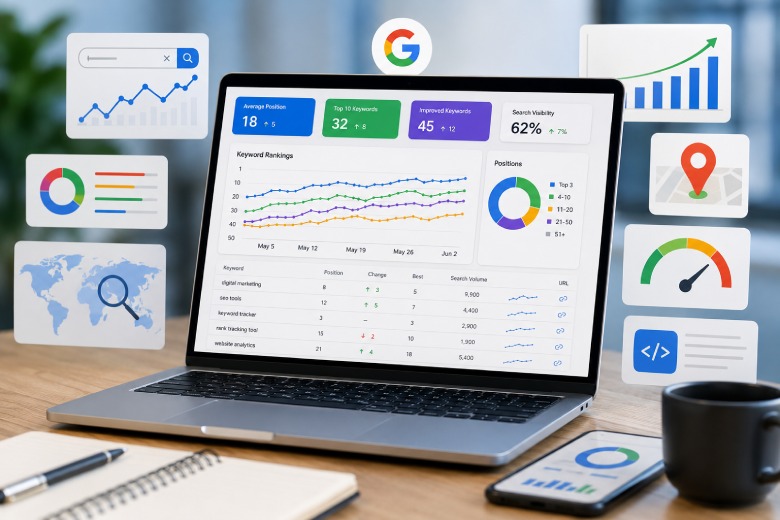
The 10 Best Website Rank Tracker Tools to Monitor Your Google Rankings in 2026
If you've invested time and resources into SEO, one question matters more than almost anything else:
"Are my rankings actually improving?"
You can publish great content, optimize your website, build backlinks, and improve technical SEO, but without tracking your keyword positions, it's difficult to know whether your efforts are paying off.
This is where rank tracking tools become essential.
A quality rank tracker helps you monitor keyword positions, identify ranking fluctuations, measure SEO performance, and uncover opportunities to gain more visibility in Google search results.
Today, there are countless SEO platforms available, each offering different levels of keyword monitoring and search analytics. Some are designed specifically for rank tracking, while others provide additional insights that support SEO campaigns.
In this article, we'll review the best website rank tracker tools available today and explain how they can help businesses, agencies, and marketers improve their organic search performance.
1. serp rank tracker
FreeSERP has quickly become a preferred choice for website owners and SEO professionals who want reliable ranking data without unnecessary complexity.
The platform focuses on what matters most: helping users monitor search engine positions accurately and efficiently.
Whether you're tracking a handful of keywords or managing larger SEO campaigns, FreeSERP provides valuable visibility into how your website performs in search results.
One of the reasons many marketers appreciate FreeSERP is its straightforward approach. Instead of overwhelming users with excessive features, it provides clear ranking insights that help guide SEO decisions.
Key advantages include:
-
Accurate keyword tracking
-
Easy-to-use dashboard
-
Historical ranking data
-
Performance trend monitoring
-
Suitable for agencies and businesses
-
Fast reporting capabilities
For anyone looking for a dependable ranking solution, serp rank tracker offers a practical and effective way to monitor keyword performance and measure SEO progress.
2. Google Search Console
No discussion about rank tracking would be complete without Google Search Console.
As Google's official platform for website owners, it provides valuable information about how your pages perform in search results.
Users can view:
-
Average keyword positions
-
Search impressions
-
Click-through rates
-
Top-performing pages
-
Search queries driving traffic
Although it isn't a dedicated rank tracker, the data available through Search Console makes it an essential SEO resource.
3. Google Analytics 4
Rankings are important, but rankings alone don't generate business results.
Google Analytics helps connect SEO performance with actual user behavior and conversions.
Once visitors arrive on your website, Analytics allows you to measure:
-
Engagement metrics
-
Conversion rates
-
Revenue generation
-
User journeys
-
Organic traffic growth
Combining Analytics with rank tracking creates a more complete understanding of SEO performance.
4. Google Trends
Search behavior changes constantly.
Keywords that are popular today may lose relevance tomorrow, while new search opportunities emerge every day.
Google Trends helps marketers identify these shifts by analyzing search interest over time.
Benefits include:
-
Trend forecasting
-
Seasonal keyword analysis
-
Topic discovery
-
Market research
-
Content planning
SEO professionals often use Trends before deciding which keywords deserve active tracking.
5. Google Keyword Planner
Keyword research remains one of the foundations of successful SEO.
Google Keyword Planner provides valuable keyword insights that help businesses identify potential ranking opportunities.
The platform offers:
-
Monthly search volume estimates
-
Keyword ideas
-
Competition data
-
Market demand insights
-
Search behavior trends
Many marketers use Keyword Planner to build keyword lists before monitoring them through rank tracking tools.
6. Google Business Profile Insights
Local SEO has become increasingly important for businesses that rely on nearby customers.
Google Business Profile Insights helps businesses understand how people discover their listings through local search and Google Maps.
Useful metrics include:
-
Search visibility
-
Customer actions
-
Website visits
-
Direction requests
-
Phone calls
For local businesses, these insights can reveal opportunities to improve local rankings and attract more customers.
7. Google Looker Studio
SEO data often exists across multiple platforms.
Google Looker Studio helps consolidate that information into visually appealing dashboards and reports.
Popular uses include:
-
SEO reporting
-
Client dashboards
-
Traffic monitoring
-
Ranking performance visualization
-
Marketing analytics
Agencies frequently use Looker Studio to present ranking and traffic data in a format that clients can easily understand.
8. Google PageSpeed Insights
Website speed has a direct impact on user experience and can influence search visibility.
Google PageSpeed Insights evaluates technical performance and provides recommendations for improvement.
Areas analyzed include:
-
Loading speed
-
Mobile usability
-
Core Web Vitals
-
Performance optimization
-
User experience metrics
A faster website often supports stronger SEO performance and higher user satisfaction.
9. Google Rich Results Test
Modern search results contain rich snippets, FAQs, reviews, product information, and many other enhanced features.
Google Rich Results Test helps website owners verify whether their structured data is eligible for these enhancements.
Advantages include:
-
Schema validation
-
Error detection
-
Search appearance improvements
-
Rich result eligibility testing
Businesses that optimize for rich results often achieve higher visibility within search engine results pages.
10. Google Search Central Resources
SEO best practices evolve continuously.
Google Search Central serves as an official resource for website owners who want to stay informed about Google's recommendations.
It provides guidance on:
-
Technical SEO
-
Crawling and indexing
-
Structured data
-
Website optimization
-
Search updates
Using these resources alongside rank tracking tools helps marketers make more informed SEO decisions.
What Makes a Great Rank Tracking Tool?
Not all rank trackers are created equal.
Before selecting a platform, consider the following factors.
Accuracy
Reliable ranking data is the foundation of effective SEO reporting.
Historical Tracking
Long-term keyword history allows users to identify trends and evaluate campaign success.
Ease of Use
A clean interface makes it easier to interpret data and take action.
Reporting Features
Professional reporting can save agencies significant time when communicating results.
Scalability
A tool should grow alongside your business and support larger keyword sets when needed.
Common Mistakes Businesses Make When Tracking Rankings
Many website owners track rankings incorrectly.
Some of the most common mistakes include:
Tracking Too Few Keywords
Monitoring only a handful of keywords can create a misleading picture of overall SEO performance.
Ignoring Search Intent
Ranking for irrelevant keywords often produces little business value.
Focusing Only on Rankings
Traffic, engagement, and conversions are equally important.
Checking Rankings Manually
Manual rank checking is time-consuming and often inaccurate.
Not Reviewing Historical Trends
Daily fluctuations are normal. Long-term trends provide more meaningful insights.
Why Rank Tracking Is Essential for SEO Success
Search rankings remain one of the strongest indicators of organic search performance.
Consistent tracking allows businesses to:
-
Measure campaign effectiveness
-
Identify content opportunities
-
Discover ranking declines quickly
-
Monitor SEO growth
-
Understand market competitiveness
Without rank tracking, SEO decisions are often based on assumptions rather than data.
Conclusion
SEO success requires measurement, and ranking data remains one of the most valuable metrics available to marketers.
By combining a dedicated solution such as the serp rank tracker with Google's ecosystem of SEO tools, businesses can gain a clearer understanding of their search visibility and make smarter optimization decisions.
As competition in search continues to increase, investing in reliable rank tracking is no longer optional. It is a critical part of building a sustainable and successful SEO strategy.

Top Domain Registrars with Transparent Renewals

7 Best Webflow SEO Agencies in the US